Ice Roller vs Gua Sha: Which One Is Right for You? (2026)
Cold and quick, or slow and sculpty? Here's how to pick, and when to use both.
Disclosure: As an Amazon Associate I earn from qualifying purchases. Links on this page are affiliate links. Read our disclosure.
Pillow creases, puffy eyelids, cheeks that slept harder than you did. Ice roller or gua sha: here's which one earns the spot on your vanity.
For most people, start with an ice roller like the ESARORA: it's the zero-skill win for puffy mornings. Add a gua sha like the BAIMEI jade when you want an evening wind-down along the jaw and cheekbones. Want one tool that does a bit of both? The Kitsch steel gua sha chills like a cold tool.
Good news: both are small, both are gentle when used right, and they do slightly different jobs. One is basically a cold compress that rolls. The other is a massage tool that asks for a few quiet minutes and a little oil.
Below: how each works, a routine that uses both, who should skip cold or scraping, and five picks. We haven't tested these hands-on. Picks are based on Amazon listings, brand info, dermatologist guidance and published research.
This is general info, not medical advice.
Ice roller vs gua sha: the quick answer
Choose an ice roller if…
Your main goal is a quick de-puff, you're short on time, or you want something that feels soothing on warm, tired skin. Two minutes, no oil, no learning curve. That's why it's our pick for most people.
Choose a gua sha if…
You enjoy a slower ritual, you want to work along the jaw and cheekbones, or tension in your face is part of the story. It takes a little practice and a little oil.
How each one works
Ice roller: it's cold therapy. Cold narrows blood vessels and helps fluid drain, which is why puffiness goes down and skin looks brighter for a while (per Cleveland Clinic's facial icing guide). The effect fades within hours.
Gua sha: it's massage. Gentle strokes may boost circulation and help lymphatic fluid move, which can ease puffiness and tension, though Cleveland Clinic notes the facial puffiness benefit hasn't been well studied. In a 2025 randomized trial, both a gua sha group and a facial roller group saw small facial contour changes (about 2 to 3 mm) after 8 weeks of 10-minute sessions, most days.
How to use both in one routine
- Morning: roll the ice roller from the center of your face outward for 1 to 2 minutes, then moisturize.
- Evening: cleanse, apply a few drops of oil, then gua sha with light, outward strokes: under the chin, along the jaw, under the cheekbones, then down the neck.
- Clean both after each use. Cleveland Clinic suggests wiping face rollers with rubbing alcohol; soap and water works for steel and most stones.
Who should skip (or go extra gentle)
- Cold tools: skip with broken capillaries, rosacea that flares with cold, Raynaud's or cold sensitivity. Keep the roller moving, and don't hold anything frozen in one spot (per Cleveland Clinic).
- Gua sha: go very light if you bruise easily or have rosacea, and avoid broken, irritated or sunburned skin.
- Both: skip right after fillers, Botox or a facial procedure until whoever treated you gives the OK.
Common mistakes
- Rolling back and forth. Roll outward, lift, repeat.
- Using a gua sha on dry skin. Always add slip first.
- Pressing like you're scraping paint. Facial skin is thin. Pink is fine; red dots mean too hard.
- Ice straight on skin. If you skip the tool and use an ice cube, wrap it in a thin cloth.
Ice rollers and gua sha compared
| Product | Type | How it works | Best for | Link |
|---|---|---|---|---|
| ESARORA ice roller | Ice roller | Cold + light pressure | Rushed, puffy mornings | View on Amazon |
| pfefe ice globes | Cryo sticks | Cold, gliding | Smooth glide around eyes and cheekbones | View on Amazon |
| BAIMEI jade gua sha | Jade gua sha | Massage with oil | An evening wind-down | View on Amazon |
| BAIMEI rose quartz set | Rose quartz roller + gua sha | Massage, light cooling | Trying both styles | View on Amazon |
| Kitsch steel gua sha | Steel gua sha | Massage, can be chilled | Cold and sculpty in one tool | View on Amazon |
Product images are styled scenes made from each brand's own product photos, not photos of the exact item. Prices change often, so tap through for today's price.
Before you buy: a quick checklist
- Ice roller: check the roller head size (small heads reach under the eyes) and that the handle stays dry and comfy.
- Gua sha: look for smooth, polished edges with no rough spots, plus a notched edge for the jaw.
- Material: stone is classic but can chip. Stainless steel won't break and is the easiest to clean.
- Storage: do you have freezer room? If not, a fridge-cooled stone gua sha is plenty.
Our ice roller and gua sha picks
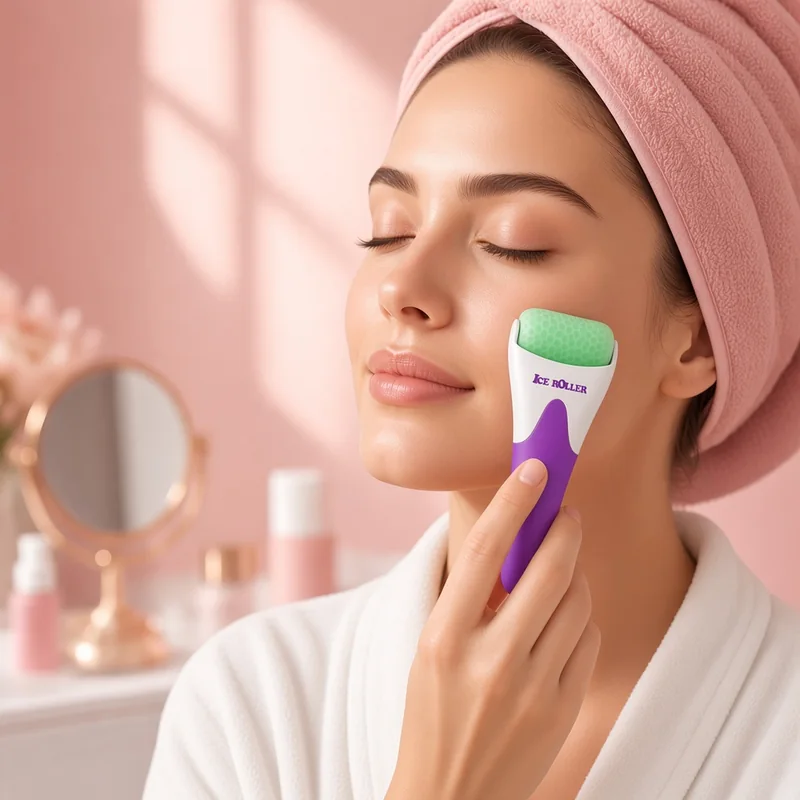
1. ESARORA Ice Roller for Face & Eye
Who it's for: Your mornings are short, your eyes are puffy, and you want relief before the coffee finishes brewing.
Skip it if: Cold makes your skin flush or flare (rosacea, broken capillaries, Raynaud's).
What stands out:
- Compared with a gua sha, there's no angle to learn: you just roll outward and lift.
- The cold is the point, and it lasts a few minutes before the head warms to skin temperature.
- A small head that fits under the eyes and along the nose.
Pros
- Zero technique
- Fast, soothing de-puff
- No oil needed
Cons
- Cold wears off in minutes, so it's a quick ritual, not a long one
- Results are temporary
- Needs a freezer spot
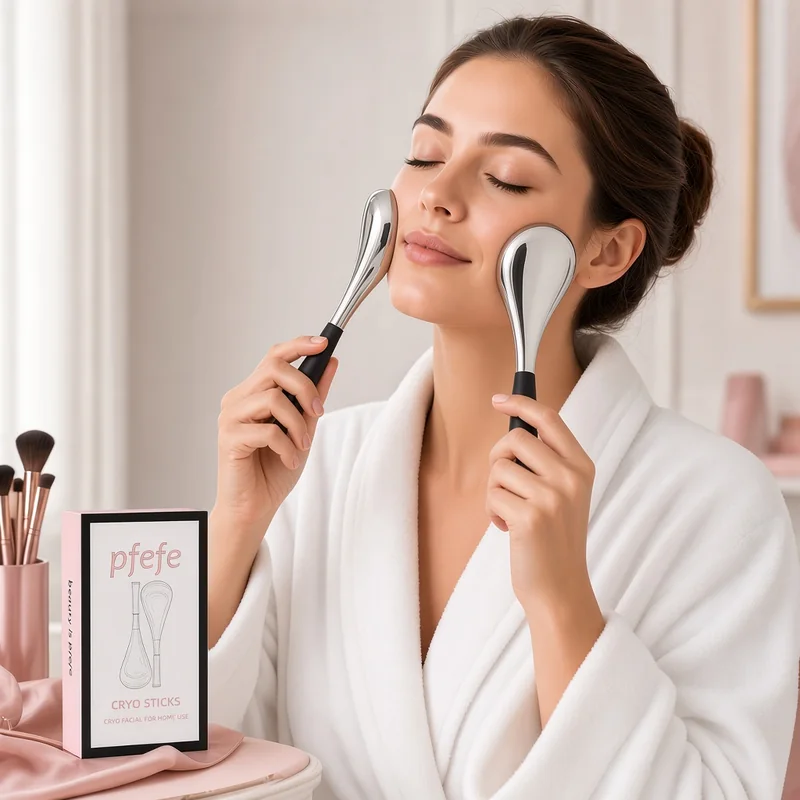
2. pfefe Ice Globes for Face (Stainless-Steel Cryo Sticks)
Who it's for: You like the cold idea but prefer a gliding feel over rolling, especially around the eyes.
Skip it if: You want something to grab without waiting: they need a few hours in the freezer first.
What stands out:
- Two stainless-steel cryo sticks, so there's no glass to crack and no liquid to leak (per pfefe).
- Chill them for 3 to 4 hours before use (per pfefe).
- Comes with a storage case.
Pros
- Won't crack if dropped
- Glides instead of rolls
- Work both sides of the face at once
Cons
- pfefe says to avoid direct skin contact when they're extremely cold, so let them sit a minute and keep them moving
- The cooling effect is temporary
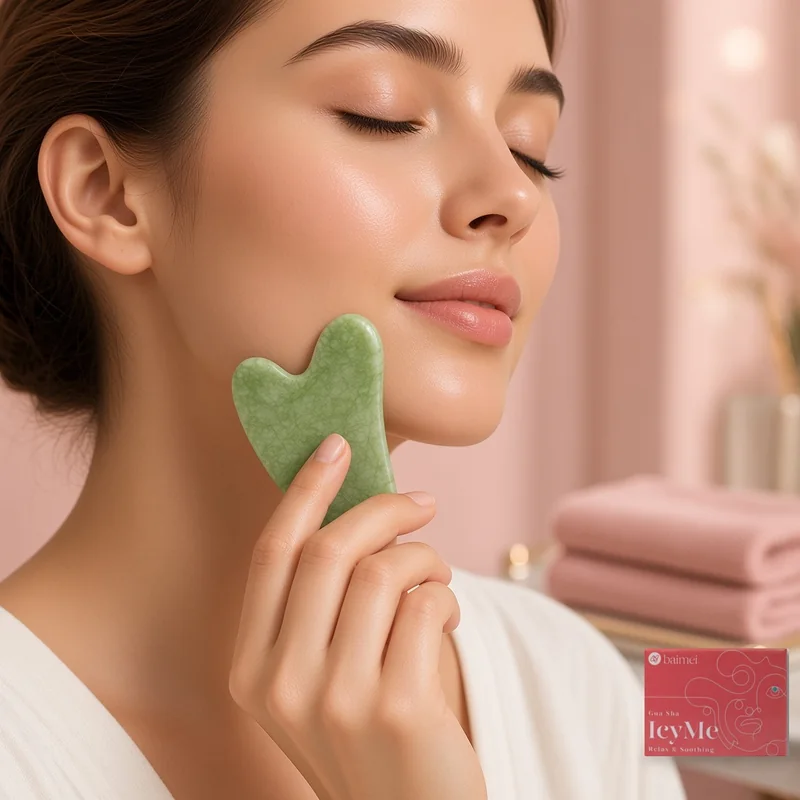
3. BAIMEI IcyMe Natural Jade Gua Sha Facial Tool
Who it's for: You want a calming few minutes at night and like working along your jaw and cheekbones.
Skip it if: You'll never make time for it: a tool that lives in a drawer helps no one.
What stands out:
- Next to an ice roller, it feels slower and more hands-on: you choose the angle and pressure on every stroke.
- Room temperature is fine; ten minutes in the fridge gives it a cooler start.
- The curved side fits under the cheekbones, which a roller can't really do.
Pros
- Very budget-friendly
- Most control of any tool here
- Turns skincare into a wind-down
Cons
- Small learning curve
- Can chip on a tile floor
- Needs oil or serum every time
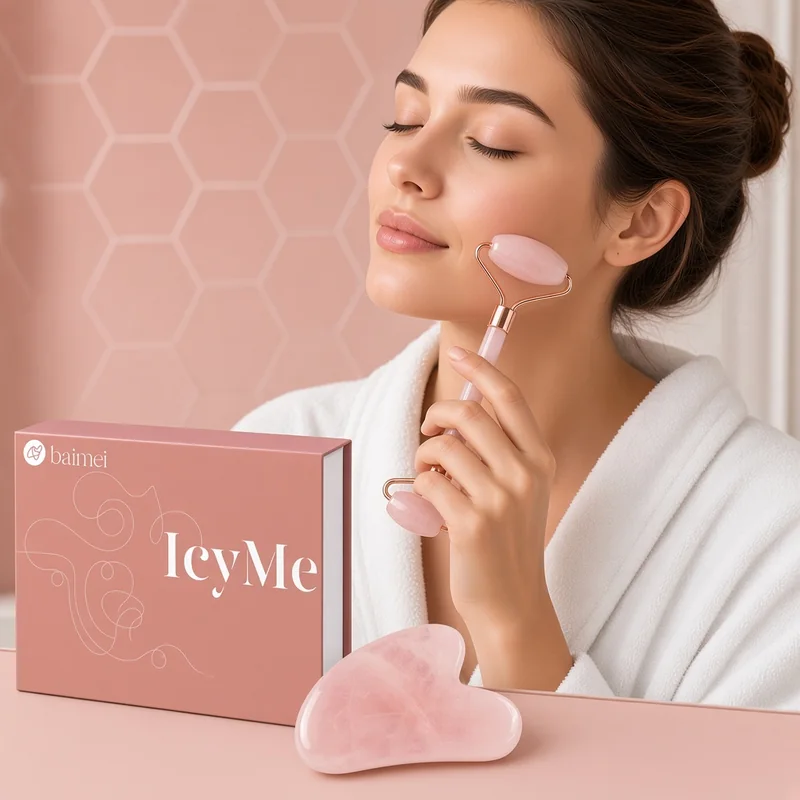
4. BAIMEI IcyMe Rose Quartz Roller & Gua Sha Facial Tool Set
Who it's for: You can't decide, so you'd like a roller for lazy days and a gua sha to grow into.
Skip it if: You only want cold: stone cools in the fridge but won't feel icy like a frozen roller.
What stands out:
- A dual-ended rose quartz roller plus a gua sha (per BAIMEI).
- The small roller end fits under your eyes; the big end covers cheeks and forehead.
- Comes in a gift box, which makes it an easy present too.
Pros
- Two tools in one box
- Roller needs no technique
- Pretty on a vanity
Cons
- Stone can break if dropped
- Not as cold as an ice roller
- Effects are temporary
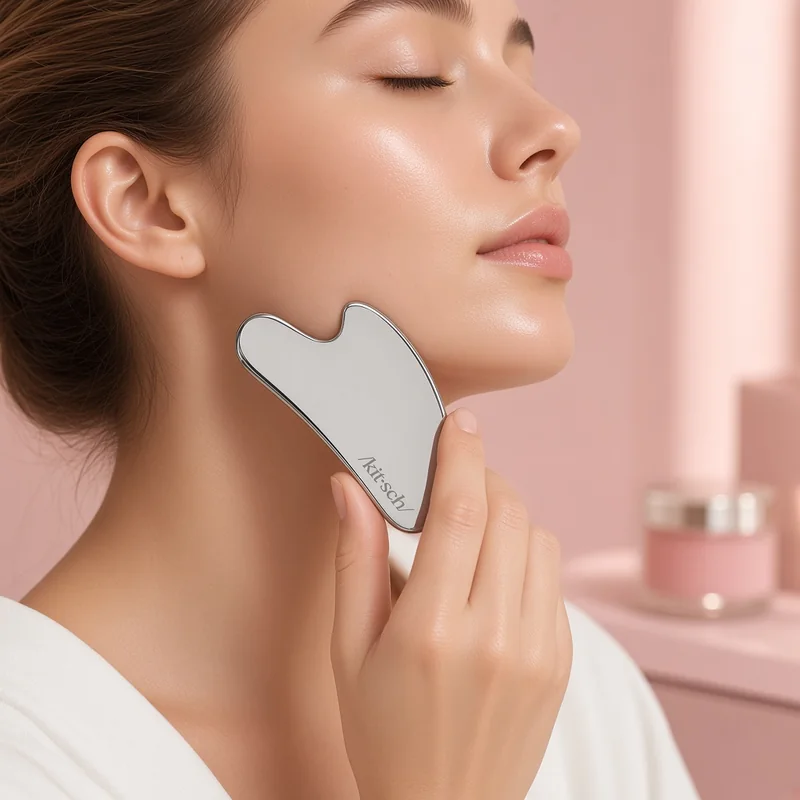
5. Kitsch Stainless Steel Gua Sha
Who it's for: You want gua sha control with ice-roller chill, in one tool that won't break.
Skip it if: You love the weight and feel of natural stone.
What stands out:
- The middle ground on this page: freeze it for an ice-roller wake-up, or warm it in your hands for a slow evening session.
- Steel won't chip the way a stone can (per Kitsch).
- Rinse with soap and water and it's ready for tomorrow.
Pros
- Cold and massage in one
- Drop-proof
- Easiest to clean
Cons
- Freezer-cold metal can sting at first, so let it rest a minute
- Lighter than stone
- Still needs oil, unlike an ice roller
FAQ
Ice roller vs gua sha: which is better?
For most people, start with the ice roller. It's the zero-skill win for puffy mornings. Add a gua sha when you want a slower wind-down along the jaw and cheekbones.
Can I use an ice roller and gua sha together?
Yes. A simple split: ice roller in the morning for puffiness, gua sha at night with oil. Or chill a steel gua sha for both in one step.
Which one depuffs faster?
The ice roller. Cold narrows blood vessels and helps fluid drain, so you see the difference in minutes. It fades within hours.
Does gua sha really sculpt your face?
A 2025 trial found small contour changes (about 2 to 3 mm) after 8 weeks of regular sessions. It won't change bone structure or remove fat.
How often should I use an ice roller?
A minute or two in the morning is plenty. Cleveland Clinic suggests icing the face no more than once a day.
Do I need oil for an ice roller?
No. Rollers work on clean or moisturized skin. A gua sha always needs oil or serum so it glides.
Who shouldn't use an ice roller?
Skip it if you have broken capillaries, rosacea that flares with cold, Raynaud's or cold sensitivity, or you've just had a facial procedure.
Shopping for someone? See beauty tool gifts by budget.
Best Beauty Tool Gifts for Her (2026)More tools? See every pick in our main guide.
Best At-Home Skincare & Beauty Tools (2026)